
Author: Dr. Starr Ramson, Naturopathic Doctor

  • Midlife Joint Pain: Is It Perimenopause?

    Midlife Joint Pain: Is It Perimenopause?

    Beyond Hot Flashes: Why Aches, Joint Pain and Slower Recovery Deserve Attention in Perimenopause and Why HRT May Not Be Enough

    Achy knees. Stiff shoulders. Sore hips. Frequent injuries. A body that doesn’t seem to recover the way it used to.

    These are some of the surprisingly common reasons women in their 40s and 50s come into my clinic. And while we tend to associate perimenopause with hot flashes, night sweats and changes in the menstrual cycle, musculoskeletal symptoms deserve a much bigger place in the conversation.

    If it seems intuitive that shifting hormones would play a role, you might wonder why the research hasn’t established a clear causal relationship. You might also wonder why hormone therapy isn’t routinely recommended specifically for women presenting with joint and muscle pain.

    The answer is more complicated, and, I think, more interesting.

    How Common Are Midlife Muscle and Joint Aches?

    A 2026 systematic review and meta-analysis examined 37 observational studies involving more than 93,000 women. Muscle or joint pain was reported by approximately 57% of perimenopausal women, compared with 40% of premenopausal women [1].

    That’s a substantial difference, and it supports something I hear repeatedly in clinical practice: women are not imagining this change in their bodies.

    Importantly, this research establishes an association, not causation. It doesn’t tell us exactly why these symptoms develop, which tissues are affected, or how much of the change can be attributed to fluctuating or declining estrogen.

    But it does tell us that musculoskeletal symptoms are common during the menopause transition and deserve to be taken seriously.

    The Role of Estrogen and What the Research Tells Us About HRT

    Estrogen has far-reaching effects beyond reproductive health. It interacts with musculoskeletal tissues, including bone, muscle, tendons, ligaments and cartilage. It also influences inflammatory signaling and the body’s ability to maintain and repair tissue.

    It makes physiological sense, then, that changes in estrogen availability could influence how our bodies feel, move and recover.

    Clinically, I see this relationship repeatedly. In many of my patients, joint aches and stiffness are among the first symptoms to improve when we appropriately address hormonal deficiencies.

    The research, however, is more nuanced.

    In the Women’s Health Initiative randomized trial, which included more than 16,000 postmenopausal women, estrogen plus a synthetic progestin resulted in greater relief of joint pain and stiffness than placebo (47.1% versus 38.4%). Generalized aches and pains also improved more frequently with treatment (49.3% versus 43.7%) [2].

    This is meaningful evidence that hormone therapy can help, but the benefit was not universal. And these findings came from a trial of older postmenopausal women using a specific oral hormone regimen, so they cannot be assumed to predict every woman’s response to contemporary HRT.

    A more recent systematic review examining HRT and musculoskeletal pain also highlights the complexity of the evidence. This review included 57 studies and more than 3 million participants. Its pooled analysis found no significant association between ever using HRT and generalized musculoskeletal pain [3].

    So where does that leave us?

    I believe we need to stop thinking about hormones as either the answer or not the answer.

    Estrogen can be an important piece of the musculoskeletal health puzzle without being the entire puzzle.

    Why HRT Alone May Not Be Enough

    One of the things I find most important in clinical practice is recognizing that hormonal changes don’t happen in isolation.

    A woman entering perimenopause may also be experiencing changes in thyroid function, glucose regulation, body composition, muscle mass, nutritional status, sleep quality and inflammatory burden.

    All of these influence musculoskeletal health.

    Consider a few examples:

    • Thyroid function: Inadequate thyroid hormone availability can contribute to muscle aches, stiffness, weakness and impaired recovery.
    • Nutrient status: Insufficient protein, vitamin D, magnesium, iron or other essential nutrients can compromise muscle function, tissue maintenance and recovery.
    • Metabolic health: Insulin resistance and impaired glucose regulation can contribute to systemic inflammation and adversely affect musculoskeletal health.
    • Inflammation: Chronic inflammatory processes can contribute to pain, stiffness and tissue dysfunction.
    • Muscle mass and conditioning: Age-related changes in muscle mass, strength and physical conditioning can increase the mechanical demands placed on joints and connective tissues.
    • Sleep and recovery: Poor sleep disrupts tissue repair, pain regulation and the body’s ability to recover from physical stress.

    This is where looking at the whole person becomes so important.

    If you’ve started hormone therapy and aren’t seeing the improvement you expected in your aches and pains, I wouldn’t automatically conclude that hormones aren’t the answer. I would ask what else might be contributing.

    It may be time to investigate thyroid function, nutrient status, inflammatory markers and metabolic health.

    It may also be time to get honest about sleep quality, strength training, daily movement, sunlight exposure, hydration, nutritional quality and whether you’re allowing your body enough time to recover.

    These aren’t secondary considerations. They are foundational to how your body functions.

    Your Body Is Asking for More Than Symptom Management

    I want women to understand that developing aches, stiffness and slower recovery in midlife doesn’t mean they simply have to accept a new, less capable version of themselves.

    Hormonal changes matter. But so does everything that influences how your body responds to those changes.

    The research may not yet establish exactly how much hormone therapy can improve musculoskeletal symptoms in every woman, but my clinical experience has consistently reinforced the value of addressing hormonal health alongside the other physiological factors that support healthy tissue, muscle function and recovery.

    And when we don’t see the improvement we’re hoping for, that’s a reason to look deeper, not to dismiss the symptoms or assume they’re inevitable.

    My goal is never simply to make a symptom disappear. It’s to understand why it’s happening and identify what the body needs to function better.

    Remember, when you give the body what it needs and remove the obstacles standing in its way, you create the conditions for healing.

    With warmth,
    Dr. Starr

    This article is for general education only and isn’t medical advice. It doesn’t diagnose, treat, or replace care from your own licensed health care provider, and reading it doesn’t create a doctor-patient relationship. Please talk with a qualified clinician about your own symptoms and before starting, stopping, or changing any medication or supplement. If you think you have an emergency, call 911.

    References

    1. Kruse C, et al. Musculoskeletal manifestations of perimenopause: systematic review and meta-analysis of 93,021 women. JB JS Open Access. 2026;11(1). 37 observational studies. Muscle or joint pain in 57% of perimenopausal vs 40% of premenopausal women (RR 1.35); high heterogeneity. https://pubmed.ncbi.nlm.nih.gov/41523660/
    2. Barnabei VM, et al. Menopausal symptoms and treatment-related effects of estrogen and progestin in the Women’s Health Initiative. Obstet Gynecol. 2005;105(5 Pt 1):1063-1073. RCT, n=16,608 (oral CEE + MPA). More relief of joint pain/stiffness (47.1% vs 38.4%) and general aches (49.3% vs 43.7%) than placebo; effect modest; oral regimen, not transdermal-specific. https://pubmed.ncbi.nlm.nih.gov/15863546/
    3. Overton R, Amini P, Chew A, Babatunde O, Mason KJ, Rathod S, Welsh V, Burton C. (2026). The effect of hormone replacement therapy on musculoskeletal pain in menopausal women: A systematic review and meta-analysis. Post Reproductive Health, 32(1), 52-68. https://pubmed.ncbi.nlm.nih.gov/41344380/

  • New ACOG Guidance: GLP-1 Medications Before, During and After Pregnancy

    New ACOG Guidance: GLP-1 Medications Before, During and After Pregnancy

    The American College of Obstetricians and Gynecologists, or ACOG, released new guidance in October 2026 on the use of GLP-1 receptor agonists in women who are planning pregnancy, pregnant, or breastfeeding.

    I want to walk you through the key recommendations, because the guidance is not the same at every stage.

    Preconception

    Pregnancy safety data for GLP-1 medications remain limited.

    ACOG advises considering discontinuation 1 to 2 months before conception. Weight regain is common after stopping, so this is also a time to support nutritional adequacy, healthy eating, physical activity and weight monitoring.

    Consider assessing vitamin D, vitamin B12 and ferritin status as well.

    Pregnancy

    ACOG recommends against GLP-1 use during pregnancy, except within a clinical trial.

    Human safety data remain insufficient, and animal studies have identified potential fetal growth and developmental concerns.

    If pregnancy occurs while taking a GLP-1 medication, treatment should not be continued.

    Lactation

    This recommendation is more nuanced.

    GLP-1 therapy may be considered as part of an individualized postpartum care plan through shared decision-making.

    A small human milk study found no detectable semaglutide in breast milk following subcutaneous administration at the measured time points (0, 12 and 24 hours).

    There are insufficient data regarding effects on milk volume, milk composition, infant weight gain and long-term infant outcomes.

    When treatment is indicated, ACOG suggests considering medications with a shorter half-life and identifies exenatide as a preferred consideration.

    Oral GLP-1 formulations should be avoided during breastfeeding.

    Infant weight gain should be closely monitored in coordination with the pediatric provider.

    ACOG recommends against use when breastfeeding preterm infants or neonates, meaning babies in the first 28 days of life.

    A Few Important Takeaways

    GLP-1 medications are not considered safe for use during pregnancy. However, ACOG’s new guidance recognizes that postpartum treatment decisions, particularly during lactation, require a more individualized approach.

    Importantly, limited evidence of medication transfer into breast milk is not the same as established safety. We still need more research on milk production, infant growth and long-term outcomes.

    If you are taking a GLP-1 medication and thinking about pregnancy, or if you are postpartum and considering treatment while breastfeeding, this is a conversation to have with your own clinician, who can help you weigh the available evidence in the context of your health.

    With warmth,
    Dr. Starr

    Source

    American College of Obstetricians and Gynecologists. Use of Glucagon-Like Peptide-1 Receptor Agonists in Pregnancy and Lactation. Practice Advisory. October 2026. https://www.acog.org/clinical/guidance/practice-advisory/2026/10/use-of-glucagon-like-peptide-1-receptor-agonists-in-pregnancy-and-lactation/

  • Are You Constipated? Here’s What You Can Do

    Are You Constipated? Here’s What You Can Do

    I define constipation as less than 1-3 complete bowel movements daily. When waste sits in the colon for an extended time, toxins and excess hormones may be reabsorbed. This becomes an obstacle to achieving optimal health and healing.

    When evaluating constipation in a patient, I always ask the following questions: 

    1. Do you feel the urge to pass stool and how often?
    2. Do you have to strain?
    3. What is the consistency, shape and color of the stool?

    Types of constipation: 

    Type I 

    “Urge constipation”

    You feel the urge to move your bowels but have to strain. Stool may be hard pellets or soft and sticky. You may have multiple bowel movements daily but never feel completely empty.

    Cause: factors that affect the ability of the colon to contract to propel waste into the rectum

    • Hypothyroidism
    • Certain medications
    • Dietary factors such as low fiber diet
    • Dehydration
    • Pelvic floor dysfunction or spasm
    • Physical obstruction or stricture due to surgical scars, endometriosis, organ prolapse or polyps
    • Stool impaction
    • Methane gas production or other irritants in the large or small bowel
    • Poor secretion of digestive juices such as bile, enzymes and stomach acid
    • Stress/trauma inhibits the parasympathetic nervous system

    Type II 

    “no urge constipation”

    You can go days without the urge to go.

    Cause: damage to the neurological circuit that stimulates the defecation reflex

    • Nervous system damage: MS, Parkinson’s, spinal cord injury, diabetic neuropathy, B12 or thiamine deficiency 
    • Sacral inflammation or misalignment
    • Rectal dilation from chronic constipation
    • Stress/trauma inhibits the parasympathetic nervous system

    Here are my top 6 natural interventions for constipation: 

    Position: 

    • Squatting with knees above the hips straightens the rectum, try sitting with a stool at the base of the toilet

    Breathing: 

    • Don’t hold your breath! Your throat, diaphragm and pelvic floor share control centers. Actively relaxing the base of your tongue to widen the throat while simultaneously breathing out relaxes the pelvic floor to allow the bowel movement to pass easier. 

    Fiber: 

    • Eat 1/2-1 cup of high fiber food with each meal: beans, artichokes, squash, berries, avocado, apples, broccoli, chia seeds, oatmeal and prunes
    • Try 1 tablespoon of psyllium seed husk powder in 12 ounces of water in the morning 

    Water: 

    • Drink 1/2 your body weight in ounces of filtered water daily

    Herbs to help with GI contractility: 

    • Take one or more of these herbal extracts twice per day before meals:
      • Ginger
      • Artichoke
      • Aloe vera
      • Bitter herbs including gentian, burdock and dandelion root
      • Triphala

    Nutrients to soften the stool: 

    • These work by pulling water into the bowels, take enough to create a soft-formed stool: 
      • Magnesium: citrate, oxide or ozonated magnesium 
      • Vitamin C

    Lab testing for constipation: 

    If you implement all of the interventions outlined above and still struggle to have a daily bowel movement, there may be a more complex cause to identify. Call your doctor to discuss functional testing to identify what is out of balance in your case. Be aware that there are often multiple factors to consider. 

    • Comprehensive thyroid panel
    • Comprehensive stool analysis
    • 3 hour breath test for hydrogen, methane and possibly hydrogen sulfide
    • Urinary organic acid test for candida 
    • Pyruvate, lactate and serum B1
    • Serum B12 level
    • Comprehensive metabolic panel to evaluate electrolytes and liver enzymes
    • Imaging and evaluation through a chiropractor, pelvic floor PT or neurologist 

    I truly hope you find relief with these therapies and feel empowered to uncover the root cause of your chronic constipation. Your body can heal! 

    With care,

    Dr. Starr

  • Thyroid Health in Pregnancy and Post-Partum

    Thyroid Health in Pregnancy and Post-Partum

    WHY IS OPTIMAL THYROID FUNCTION IMPORTANT IN PREGNANCY?

    For momma: helps avoid extra fatigue, constipation and weight gain as well as postpartum depression and low milk supply

    For baby: developing babies depend on momma’s thyroid hormones for the first 20 weeks of gestation!

    Hypothyroidism in pregnancy can have some pretty scary outcomes including fetal death, maternal hypertension, preterm birth, breech delivery and low birth weight. For this reason, I take it very seriously. I recommend all newly pregnant mommas have a full thyroid panel in the first trimester. For all mommas with preexisting hypothyroidism, I monitor levels every 2-4 weeks during pregnancy and for the first 3-6 months postpartum.

    CAUSES OF HYPOTHYROIDISM IN PREGNANCY: 

    1. Estrogen increases the production of thyroid binding proteins, making the free, active hormone less bioavailable. 
    2. The placenta increases the breakdown of both T4 and T3.
    3. Increased maternal blood volume dilutes thyroid hormones.
    4. Increased maternal kidney filtration results in more iodine loss, an essential nutrient for thyroid function.

    LAB TESTING: 

    TSH: A hormone produced in the brain that tells the thyroid to produce T4, elevated in hypothyroidism

    T4: Thyroid hormone released by the thyroid gland

    T3: Made from T4 in your tissues, the most active thyroid hormone

    Simply measuring TSH is not enough in pregnancy. The hormone HCG, produced by the placenta, will partially suppress TSH. For this reason, we need to look at a complete thyroid panel that includes not only TSH, but free T4 and free T3 as well. 

    TREATMENT: 

    Medication: 

    Very little T3 crosses the placenta and so offering both T4 and T3 could lower the amount of T4 that baby receives. As a general practice, T4 alone is my choice in pregnancy, with some exceptions. If momma is stable on combination therapy before she becomes pregnant and numbers remain stable during pregnancy, it is ok to continue. 

    If free T3 is suboptimal, we focus on improving T4 to T3 conversion with therapies such as nutrients, reducing stress and limiting inflammatory foods. 

    Nutrients: 

    Thyroid hormone production and metabolism depends on iodine, selenium, zinc, vitamin D and iron. All pregnant mommas should evaluate the amounts of these nutrients in the prenatal. If the prenatal is offering much lower doses, discuss additional sources from food or supplements with your doctor if indicated. Note, most of these are maximum daily levels.

    • Iodine: 225mcg
    • Selenium: 100-200mcg 
    • Zinc: 15-25mg 
    • Vitamin D: 1,000-5,000IU 
    • Iron: dose based on lab values

    Thanks for reading! Give us a call to get your thyroid labs drawn if you’re in early pregnancy, breast-feeding or thinking about conceiving. We’re here to support you!

  • Take Control of the Spread: 5 Tips to Avoid Overeating During the Holidays

    Take Control of the Spread: 5 Tips to Avoid Overeating During the Holidays

    Thanksgiving is a time to celebrate family traditions and to be mindful of our deep gratitude for the joys of life. It is not a time to feel guilt or to be rigid with ourselves. Overeating on thanksgiving is a common concern and it usually progresses to overeating on Christmas, over drinking on New Years and over judging ourselves in the New Year. What’s up with all this overdoing?! I’m here to tell you that overdoing is a part of being human in this world of plenty. You’re not alone in having to unbutton the belt buckle on the eve of turkey day and you’re certainly not alone if you criticize yourself or over exercise…and over spend on black Friday. As a doctor, I find that much of the stress around the holidays stems from this terror of the inevitability of overdoing. Wouldn’t it be nice to enter the holiday season, not as a victim but instead as a creator?

    I want to emphasize that overeating rarely has anything to do with a lack of self-control. I promise you that the majority of the time, you overeat because you’re just really hungry! Who can resist such a plentiful bounty with such an empty belly?

    thanksgiving

    This thanksgiving, I invite you to leave self-judgment at the door so that you can practice what I call taking control of the holiday spread. With a few strategies to set you up for success, you can approach the turkey and all her delicious fixings with a new found clarity and actually enjoy your meal, your pie AND your leftovers.

    Don’t starve before the big meal…Eat a protein rich breakfast (10 grams or more) and do not go longer than 4 hours before the holiday meal without a protein snack:

    • Celery or carrots with almond butter or hummus
    • Hard boiled eggs
    • Protein green smoothie

    Eat mindfully:

    • Sit with a family member you need to catch up with
    • Take three deep abdominal breaths before starting your meal
    • Chew, swallow and savor each bite completely before taking your next one

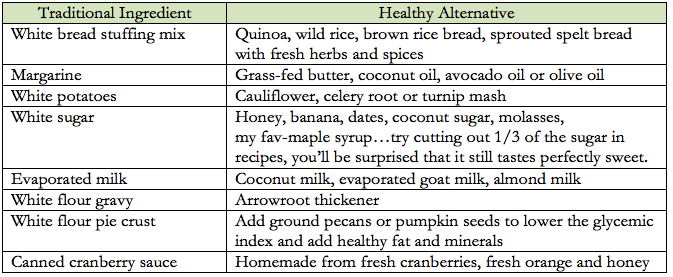
    Choose healthy alternatives to reduce the glycemic index and bad fats:

    Screen Shot 2015-11-26 at 10.23.51 AM

    Make more vegetable dishes to cover ½ your plate with colorful vegetables:

    • Healthy green bean casserole
    • Roasted carrots and fennel
    • “Creamed” spinach with greek yogurt or arrowroot thickened gravy
    • Roasted brussel sprouts
    • Sautéed Kale
    • Steamed broccolini
    • Green beans with almonds

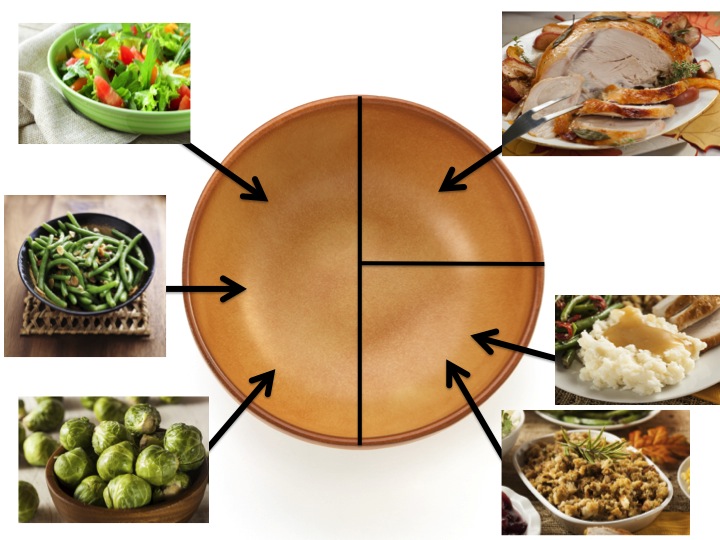
    Build a balanced plate: slide11

    • ¼protein-turkey
    • ¼ carbohydrate-stuffing, yam, sweet potato, biscuits, rolls, mashed potato
    • ¼ colorful vegetables-squash, salad, mushrooms, roasted onion, carrots, cauliflower and celery root mash
    • ¼ green vegetables

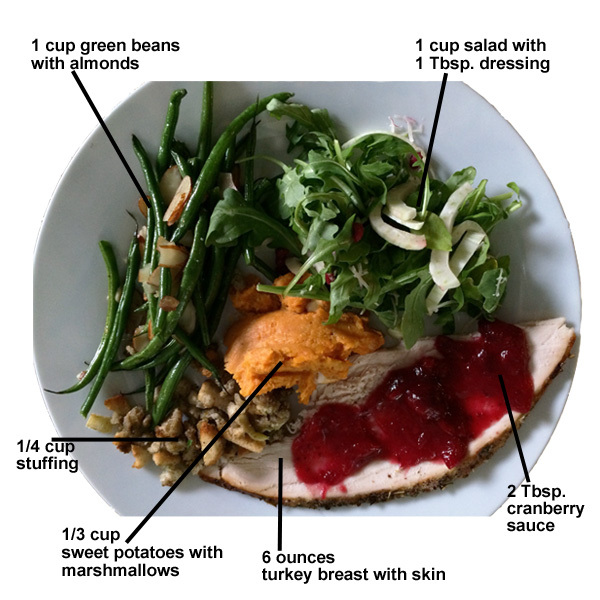
    RevisedPlate

    Building a balanced plate ensures that you have enough nutrients to help you to feel full faster and stay full longer. It will also keep the glycemic load of the meal down so that your blood sugar doesn’t spike too high, which can result in a rebound low blood sugar and…well, midnight turkey and stuffing sandwiches. Be gentle with yourself this holiday season. Remember, thanksgiving is not just a time to show gratitude to our loved ones, it is an opportunity to show ourselves the kind of love and honor we crave. Honor yourself this season by setting yourself up for success. If overeating drives discomfort for you, these are some strategies to preserve the fun and the tradition but allow you to take control of the spread.


  • Perfect in Our Imperfection, the Journey to Self-Acceptance

    Perfect in Our Imperfection, the Journey to Self-Acceptance

    “I’m not pretty enough, smart enough, successful enough, rich enough, skinny enough, funny enough”…the list goes on and on and on. I invite you to ask yourself, what if you were just enough, what would it mean for you to accept yourself just as you are?

    stroll_through_a_sunny_day_by_raccoon478-d65u2zg

    Imagine for a moment, you’re walking down the street; the sun is shining, the day ripe with potential. You’re thinking about how to design your day. What will you accomplish, will you laugh, maybe you’ll cry, whom will you connect with? The day is yours.

    Now imagine that you aren’t alone, instead you are followed by an angry mob. Someone yells, “you’re fat and disgusting, you have no self control, pathetic, a glutton”. Another, “you’re foolish, unintelligent, a waste of space”. These violent insults are flying at you all at once; the voices are so loud and so vivid that you can no longer think about your day because your vision is clouded by shame.

    angry-mob

    This may seem extreme but unfortunately, many of us go through our lives housing this mob within us. We speak to ourselves with some of the most violent language we would ever dare to use outside of our own heads. Everyday, our chance of creating what we envision is eclipsed by the prolific judgment and criticism that dominates our consciousness.

    Humans learn shame at a very young age. Bullying, name-calling, violence, no matter the magnitude, all reinforce the message that we aren’t enough, that our worthiness is contingent on what we make, say or do and even on how we look. Shame is not unique to victims of abuse; we learn shame by observing others’ shame. Parents, who overwork, never talk about feelings, criticize themselves, all teach shame. Studies show that children who are surrounded by piers with low self worth tend to emulate this behavior. We learn shame from others but yet we hide it from others. The many faces of shame silence it. It drives perfectionism in some and procrastination in others. This incredible diversity of shame symptoms make us feel isolated and weird, further driving the silence.

    I want to communicate to you that you are not alone. Shame is a part of being human. The idea that we must be hard on ourselves, that we must always be striving to be better is deeply ingrained in our culture. As a naturopathic doctor, I believe in the intelligence of the human body. When there is a stressor, the human body strains back in order to survive. For modern humans, I believe the most fundamental stressor is an aching need to connect. Success, financial freedom, beauty, all of these drive us but they drive us because of what they provide: the opportunity for connection.

    When it comes to disease, we always seek to understand the underlying triggers. In my practice, I approach shame in much the same way. We explore where the shame originated from and also what perpetuates it:

    1. The dynamic in your childhood home.
    2. Your role in the household including how many siblings and your relationship with them.
    3. Parents’ professions and if they had any vices (workaholics, addicts, emotionally closed, self deprecating) .
    4. Was your home a place you could share your hopes, dreams and fears?
    5. The impact of your first serious romantic relationship.
    6. Did you have friends growing up or into adulthood that you could be yourself with?
    7. Were you bullied? Over what?
    8. What are the top 5 things you dislike about yourself?
    1. _______________________________________
    1. _______________________________________
    1. _______________________________________
    1. _______________________________________
    1. _______________________________________
    1. What are the top 3 situations that cause you to be reminded of the previous 5?
    1. _______________________________________
    1. _______________________________________
    1. _______________________________________
    1. How do the previous answers reveal who you truly want to be? Give three words to describe the kind of person you would be if you simply could not fail:
    1. ____________
    1. ____________
    1. ____________

    11. Now write yourself a mantra using the 3 words above:

    I AM a ____________, ____________, ____________ man/woman/leader/human.

    Repeat this mantra to yourself in times of struggle, when you need to be reminded of who you want to be.

    Once we have identified triggers and mediators, we can begin the therapeutic process. This starts with replacing the habit of beating yourself up with a new habit of self-acceptance so that you can embody your vision for your highest self. The protocol for creating self-acceptance is similar to healing any health concern: give the body what it needs, take out the garbage and stimulate the vital force.

    GIVE THE BODY WHAT IT NEEDS:

    Have you ever asked yourself the question, what do I need right now? Amidst a shame storm of sitting down to a pint of chubby hubby, what if, before indulging, you ask yourself “how do I feel right now, what do I need?” What you discover may surprise you…the answer usually isn’t chubby hubby. Many of my patients crave sweets when they are in need of comfort. Salty foods are a go to when stressed, especially the crunchy ones-start out hard but you chew them down to a soft paste, easy to swallow. These kinds of substitutions for what we actually need distract us from creating and discovering the ingredients required for us to be our best selves. The next time you are about to numb in some way, whether it’s TV, alcohol, drugs, food, sex, a fight with your spouse, yelling at your kids…etc, just ask. Ask the same way you would ask a friend, with love and compassion. If the answer truly is chubby hubby, great, enjoy it! If is something more, you get to discover that by asking.

    The basic needs of all humankind:

    1. Clean water
    2. Whole, vibrant and personalized food
    3. Movement
    4. Sleep
    5. Sunlight
    6. Nature
    7. Connection
    8. Play
    9. Purpose

    Are you fulfilling these needs for yourself every single day? If the truthful answer is no, this is the place to start. There is no greater enemy to shame than self-care and there is no better way to learn to love yourself than to provide yourself with everything you need to thrive.

    sooty-mold1

    If I told you I had a houseplant that became infected with mold. Could I heal the plant by treating it with an antifungal? Perhaps. What if the plant lived in the basement in deficient soil and I always forgot to water it? I could kill the mold but it would likely return because the conditions were perfect for mold to grow. We CANNOT heal by simply eliminating the darkness (shame, infections, self-criticism, toxins, food allergies, etc). Healing starts by adding in light (basic needs).

    plant

    One of my favorite antidotes for shame is self-compassion. Since one of our basic needs is connection, try connecting with yourself in a time of crisis with this simple self-compassion exercise:

    1. Recognize that what you are feeling is suffering.
    2. Acknowledge that suffering is a human experience.
    3. Offer yourself a gentle touch: hand over your heart, caressing your cheek, on your belly or even just on your thigh.
    4. Speak to yourself with words that convey kindness, words you would use with a child or with a loved one: I’m so sorry you are hurting, this is so hard, I am here for you, you’re not alone…

    TAKE OUT THE GARBAGE

    In medicine, by garbage, we mean inflammatory foods, toxins, infections, toxic relationships, stress, etc. When it comes to the quest for self-acceptance, the mob is the trash. As with any habit, the most successful strategies for change require what I call the trio of change:

    1. Replacement with something that produces an equally yummy reward. In the case of shame, gratitude tends to be best antidote. Adopt a 21 day gratitude challenge: every time you catch the mob saying something judgmental or critical, challenge it with something you are grateful for about yourself.

    Example:

    Mob: “I am fat”

    Challenge: “I am grateful to myself for the effort I make to exercise”

    You will find that you will start to crave the compliments.

    1. Community. Have you ever heard the saying “It takes a village”? Well, it’s true. The most successful habit changes happen when our community supports us, empathizes with us and shares our experience. Ask your friends and family to join you in the 21-day challenge. You will learn how deeply shared the habit of shame is.
    1. Belief in yourself and in a higher power, that change is possible. To change a habit, you must first want to change and second believe that you have the capacity to do so. Studies show that addicts who pray, have greater success rates in recovery than those who have no spiritual practice. Spirituality is not only religion, it is a belief in a force greater than one’s self, which permeates and connects all things. If you don’t have a spiritual practice yet, you can start by integrating mindfulness into your daily life. Notice the ordinary and yet extraordinary details in nature and in others around you. Once you open your awareness to the beauty around you, you will begin to realize that there is deep meaning and purpose in every living thing, especially you.

    STIMULATE THE VITAL FORCE

    The vital force, also known as the vis medicatrix naturae.

    “It is this supreme power and intelligence, acting in and through every atom, molecule and cell in the human body, which is the true healer, the “vis medicatrix naturae” which always endeavors to repair, to heal, and to restore the perfect type.”-Henry Lindlahr

    This is the healing force that creates the sniffles when you have a cold and that produces a rash when you have an allergic reaction. It is this same force that generates shame. So how do we stimulate the vital force to promote self-acceptance? The answer here is connection. If the need for connection drives us to use shame as a motivator, why not just bypass the shame and reach out?

    Make no mistake; this is not about seeking cure outside of yourself. On the contrary, receiving true connection requires giving. Shame keeps us from opening our hearts and sharing our story and that silence is the breeding ground for feeling unworthy, lonely and incapable of giving love. Telling your story generates deep connection and it gives other people permission to do the same. The next time someone you trust asks you how you are, tell the truth. Tell them you are suffering, tell the story and give them the chance to show up for you. You will find that they will do the same and the isolating feeling of being weird and wrong will melt away. You will begin to learn that we are all the same, perfect in our imperfection and worthy of being heard.